
Full guide
Poon Hill Trek
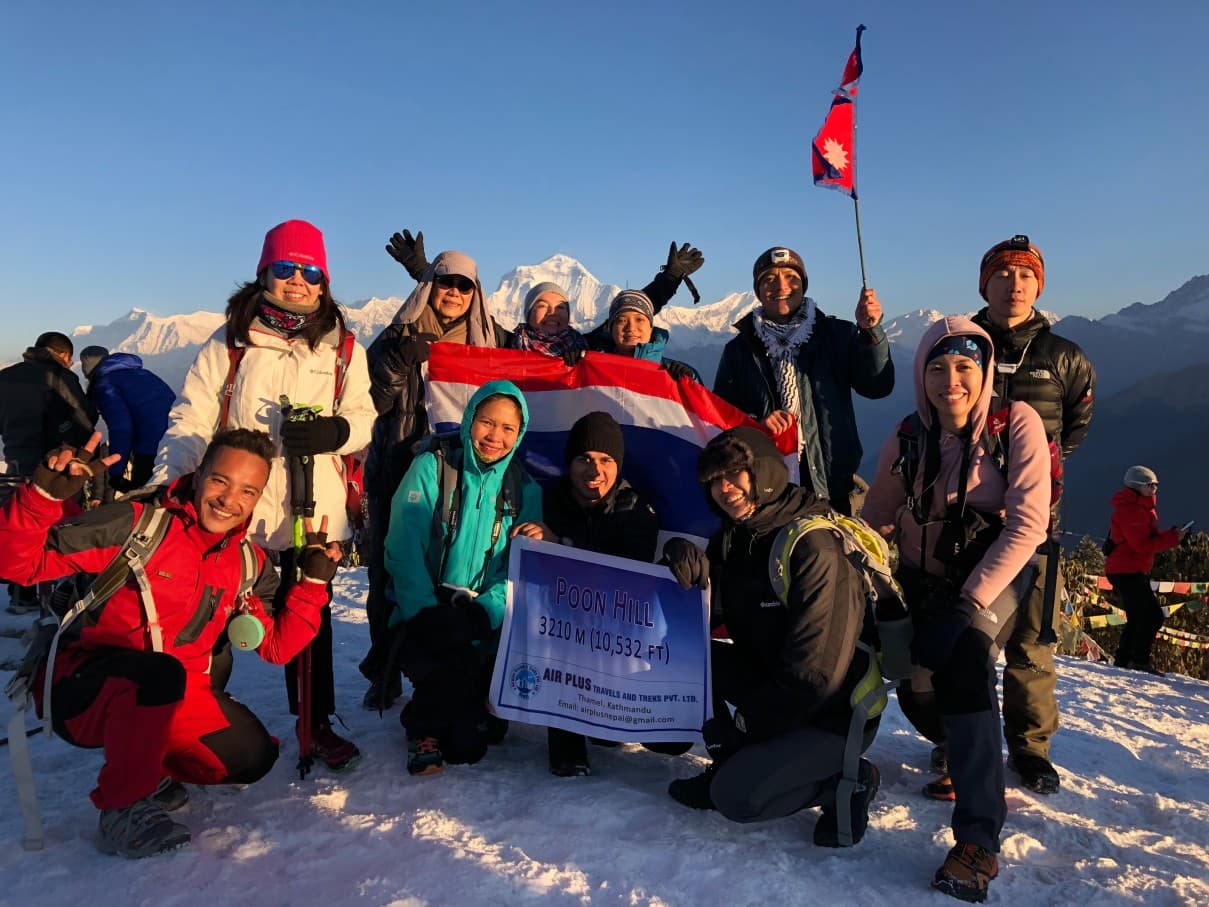
Poon Hill is one of the best short treks in Nepal for a simple reason: the effort-to-view ratio is high. In a few days of walking you can reach a classic sunrise viewpoint with the Annapurna and Dhaulagiri ranges laid out in front of you.
It is also a trek that works for many kinds of travelers. The altitude stays moderate, the teahouse network is strong, and the route can be done at a comfortable pace.
Quick Overview
| Detail | Information |
|---|---|
| Duration | 4 to 8 days (many itineraries are 5 to 7) |
| Maximum altitude | 3,210 m (Poon Hill) |
| Difficulty | Easy to moderate (lots of steps, but lower altitude) |
| Starting point | Usually reached by road from Pokhara (Tikhedhunga/Nayapul side; route varies) |
| Ending point | Often ends at Ghandruk side or returns toward the start point |
| Best trekking seasons | Spring (March to May), Autumn (September to November) |
What Makes This Trek Special
The sunrise from Poon Hill is the headline, but the trek is more than one viewpoint. The route passes through forest sections, stone villages, and terraced hillsides that feel very “Nepal” even before you reach higher viewpoints.
It is also a social trek. In peak seasons, the trail and teahouses have energy, and it can feel friendly and easy to navigate.
Where Is It And How Do You Get There?
Poon Hill is in the Annapurna region, usually approached from Pokhara.
Most itineraries start with Kathmandu to Pokhara travel, then a short road transfer to a trailhead. The exact start point depends on your route choice and road conditions.
Many versions of the trek combine Ghorepani, Poon Hill, and Ghandruk.
What The Trek Is Actually Like
Expect steps. The trek is often labeled “easy,” but it can still be tiring because of repeated stair climbs, especially around Ulleri and the climb toward Ghorepani.
Days are usually 4 to 6 hours of walking, and the daily rhythm is simple: breakfast, morning walking, lunch, then an afternoon arrival and rest.
Poon Hill morning is early. You hike in the dark with a headlamp, reach the viewpoint, and then walk back down for breakfast.
Route Overview
A common route is:
Pokhara -> road transfer -> Tikhedhunga/Ulleri -> Ghorepani -> Poon Hill sunrise -> Tadapani -> Ghandruk -> return to Pokhara.
There are shorter and longer variants depending on your time.
Suggested Itinerary
Day 1: Arrive in Kathmandu
Day 2: Kathmandu to Pokhara
Day 3: Drive to trailhead, trek to Ulleri
- Duration: 4 to 6 hours
- Notes: lots of steps
Day 4: Ulleri to Ghorepani
- Duration: 4 to 6 hours
- Notes: forest sections, steady climbing
Day 5: Poon Hill sunrise, trek to Tadapani
- Duration: 6 to 8 hours total (including sunrise hike)
- Highlights: sunrise viewpoint
- Notes: start early; bring warm layers
Day 6: Tadapani to Ghandruk, drive to Pokhara
- Duration: 4 to 6 hours
- Notes: easier descent and village finish
Day 7: Pokhara to Kathmandu
Day 8: Departure
Best Time To Go
Spring
Spring brings warmer days and blooming rhododendrons in forest sections.
Autumn
Autumn often gives clearer skies and comfortable temperatures. It is also the busiest season.
Winter
Winter can be crisp and quiet, with cold mornings at the viewpoint. Snow is possible but usually manageable depending on the year.
Monsoon
Monsoon brings rain, cloud, and leeches lower down. The landscape is green, but views are less predictable.
Accommodation Along The Route
Accommodation is teahouse-based with frequent stops. Rooms are simple and dining halls are social.
Food And Local Flavours
Food is standard teahouse fare: dal bhat, noodles, soups, rice, eggs, potatoes, and tea. It is straightforward and filling.
Culture And Local Life
This route passes through Gurung and Magar communities. Villages are part of daily life, not a show. A respectful approach is basic: ask before photographing people and keep clothing modest.
Things To Know Before You Go
The viewpoint morning is cold. Pack a warm layer even if daytime walking feels warm.
The steps add up. Poles can help, especially on descent.
Practical Tips From Recent Trekkers
Start early to avoid afternoon cloud.
Carry a headlamp for the sunrise walk.
Packing And Preparation Tips
Warm hat and gloves for Poon Hill morning.
Rain protection in shoulder seasons.
Trekking poles help on stairs.
Safety And Responsible Trekking
Altitude issues are uncommon at this height, but pacing still matters.
Respect trails and villages: minimize waste and stay on established paths.
Final Thoughts
Poon Hill is popular because it is practical and rewarding. If you want a short trek with strong mountain views, teahouse comfort, and a clear highlight moment, it is one of the best choices near Pokhara.