Full guide
Manaslu Circuit Trek
Manaslu feels like Nepal with the volume turned down. The villages are smaller, the trail often feels quieter, and the sense of distance builds as you move deeper into the valley. It is still a teahouse trek, but compared with the biggest routes, it often feels more raw and less busy.
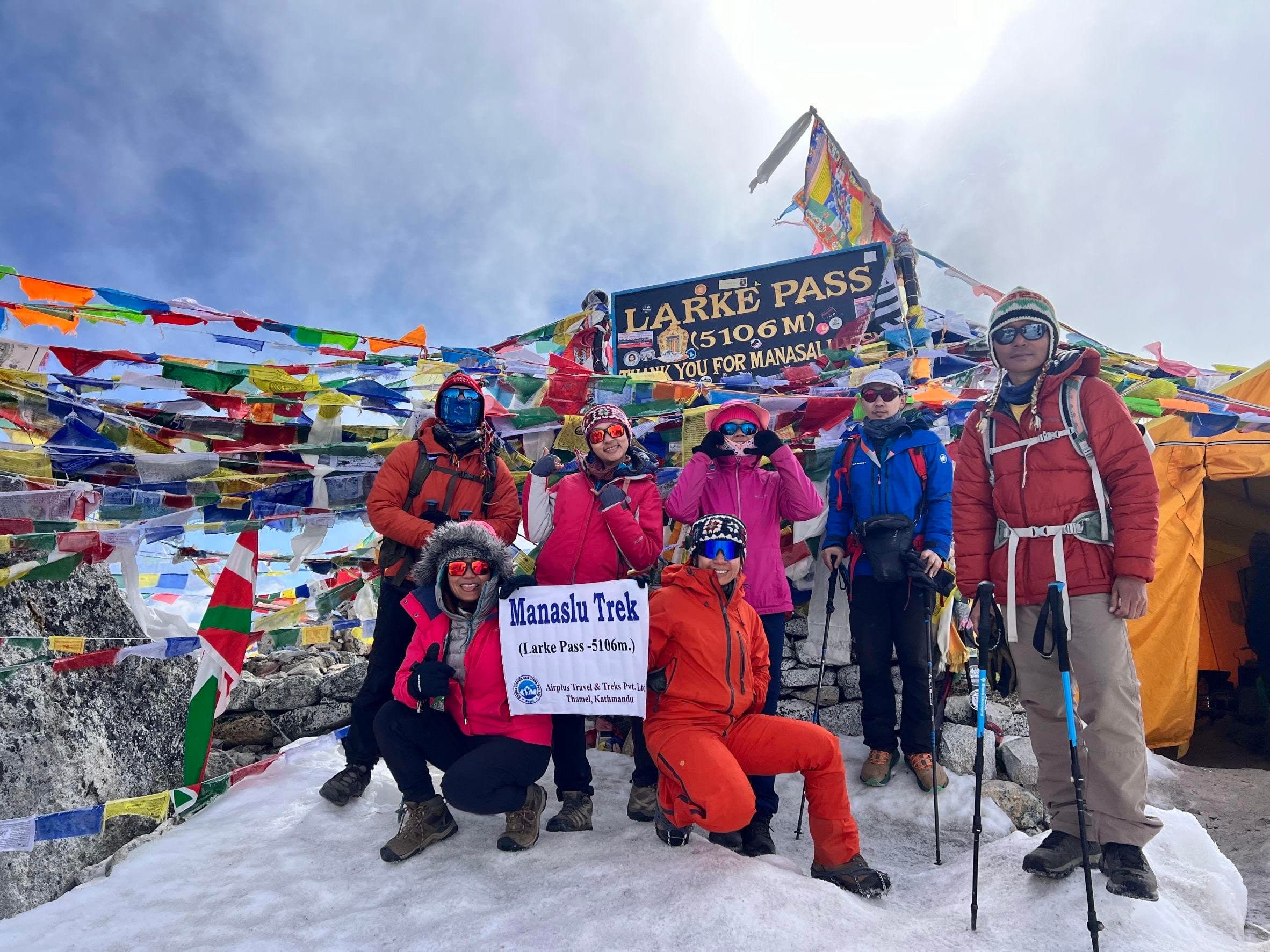
The heart of the trek is crossing Larkya La Pass (5,160 m). Getting there is not a sprint. It is a steady climb through changing landscapes and strong cultural influence, especially as the route approaches the upper valley.
Quick Overview
| Detail | Information |
|---|---|
| Duration | 12 to 16 days is common (many itineraries are 14 to 15) |
| Maximum altitude | 5,160 m (Larkya La Pass) |
| Difficulty | Strenuous (altitude + long days + pass day) |
| Starting point | Usually reached by road from Kathmandu (Maccha Khola / Soti Khola area) |
| Ending point | Exits toward Dharapani/Besisahar side (varies) |
| Best trekking seasons | Spring (March to May), Autumn (September to November) |
What Makes This Trek Special
Manaslu stands out for its quieter feel and strong cultural character. As you gain altitude, the villages and landscapes begin to feel more Tibetan-influenced, and the upper valley has a colder, more open atmosphere.
The trek also has a strong sense of “deepening.” Each day you move farther from roads and larger towns. When you finally cross Larkya La, it feels like a real turning point rather than a quick side trip.
Where Is It And How Do You Get There?
The Manaslu Circuit runs in the Manaslu region of Nepal.
Most itineraries start with a road drive from Kathmandu to a trailhead near the Budhi Gandaki valley. The drive can be long. After finishing the pass and descending, the route typically exits toward the Annapurna side road network for a drive back to Kathmandu.
Manaslu is also a region where permits and rules can be more strict than in general trekking areas. Many trekkers arrange logistics through a registered agency.
What The Trek Is Actually Like
This trek is a mix of valley walking, suspension bridges, forest sections, and then higher, colder terrain above Samagaon/Samdo.
Many days are 5 to 7 hours of walking, but the pass day can be significantly longer. Trail conditions change with weather. In the upper section, cold wind and snow can affect timing.
Acclimatization days are not optional extras here. They are what make the pass day more realistic and safer for most trekkers.
Route Overview
A common route flows like:
Drive from Kathmandu -> Maccha Khola / Soti Khola area -> Jagat -> Deng -> Namrung -> Samagaon -> acclimatization -> Samdo -> Dharamsala (Larkya base) -> cross Larkya La to Bimtang -> descend toward Tilije/Dharapani -> drive out.
Suggested Itinerary
Day 1: Arrive in Kathmandu
- Notes: prep and rest
Day 2: Kathmandu logistics day
- Highlights: final planning and permits
- Notes: keep this day flexible
Day 3: Drive to Maccha Khola
- Duration: long drive
- Altitude: ~900 m
- Notes: road condition affects timing
Day 4: Maccha Khola to Jagat
- Duration: 6 to 8 hours
- Altitude: ~1,410 m
- Highlights: valley walking and bridges
Day 5: Jagat to Deng
- Duration: 6 to 7 hours
- Altitude: ~1,804 m
- Highlights: gradual elevation gain
Day 6: Deng to Namrung
- Duration: 6 to 7 hours
- Altitude: ~2,630 m
- Highlights: villages and changing valley feel
Day 7: Namrung to Samagaon
- Duration: 6 to 7 hours
- Altitude: ~3,530 m
- Highlights: entering the upper valley
Day 8: Acclimatization day
- Duration: light hike
- Highlights: side exploration and better adaptation
Day 9: Samagaon to Samdo
- Duration: 3 to 5 hours
- Altitude: ~3,860 m
- Notes: shorter day helps with acclimatization
Day 10: Samdo to Dharamsala
- Duration: 4 to 6 hours
- Altitude: ~4,460 m
- Notes: cold night; prepare layers for pass morning
Day 11: Cross Larkya La, descend to Bimtang
- Duration: 8 to 11+ hours
- Altitude: 5,160 m (pass), Bimtang ~3,720 m
- Highlights: the main pass day
- Notes: start very early; carry warm layers and water
Day 12: Bimtang to Tilije
- Duration: 5 to 7 hours
- Altitude: ~2,300 m
- Highlights: scenery shifting as you descend
Day 13: Trek to Tal / drive out
- Notes: itinerary varies by road access
Day 14: Drive to Kathmandu
Day 15: Departure
Best Time To Go
Spring
Spring is popular for more stable weather and comfortable daytime hiking. High sections can still see snow early in spring.
Autumn
Autumn often gives clearer skies and reliable conditions for the pass. It is the peak season for many long treks.
Winter
Winter is colder and snow can make the pass difficult or impossible at times. It suits experienced cold-weather trekkers with flexible timing.
Monsoon
Monsoon brings rain, clouds, and more difficult trail conditions in the lower valleys. Shoulder monsoon periods can work with extra buffer days.
Accommodation Along The Route
Accommodation is teahouse-based. Rooms are simple and the dining room is where warmth and social time happens. Facilities can be more basic in the upper valley compared with major routes.
Food And Local Flavours
Meals are simple and filling: dal bhat, soups, noodles, rice, potatoes, eggs, and tea. Keep expectations practical and focus on steady energy.
Culture And Local Life
The upper Manaslu region has strong Tibetan cultural influence. You will see mani walls, monasteries, prayer flags, and village customs that deserve respect. Ask before photographing people and avoid loud behavior around religious areas.
Things To Know Before You Go
Pass day is long and can be cold. Build your itinerary so you are not rushed.
Permits and rules can be stricter here. Many itineraries require agency arrangements.
Practical Tips From Recent Trekkers
A slow, steady pace is more useful than fitness bravado at altitude.
Carry warm layers for mornings and evenings, especially in the upper valley.
Packing And Preparation Tips
A warm insulating jacket, gloves, and a good shell matter for pass morning.
Trekking poles help on both climbs and descents.
Safety And Responsible Trekking
Altitude awareness matters. If symptoms worsen, descending is the safest response.
Insurance that covers trekking and evacuation is strongly recommended.
Minimize waste and respect local customs.
Final Thoughts
Manaslu is a great choice if you want a longer trek that feels quieter and more traditional. It still requires effort and respect for altitude, but the reward is a route that feels like a real circuit rather than a single out-and-back walk.