Full guide
Everest Base Camp Trek
Everest Base Camp is not a single moment. It is a steady build-up of small, real things: the first suspension bridges, the first long uphill to Namche, the first day when you notice your breath, and the first time the Khumbu valley feels like high mountains instead of hills.
What makes the EBC trek special is how normal life continues along the trail. You walk through Sherpa villages where trekking is part of the local economy, but also part of the local rhythm. You sleep in teahouses, eat simple meals, and wake up to cold mornings that turn into bright walking weather.
Quick Overview
| Detail | Information |
|---|---|
| Duration | 12 to 16 days is common (many itineraries are 14 to 15) |
| Maximum altitude | 5,545 m (Kala Patthar viewpoint) |
| Difficulty | Strenuous (altitude + long days) |
| Starting point | Lukla (usually reached by a domestic flight) |
| Ending point | Lukla (most itineraries return the same way) |
| Best trekking seasons | Spring (March to May), Autumn (September to November) |
What Makes This Trek Special
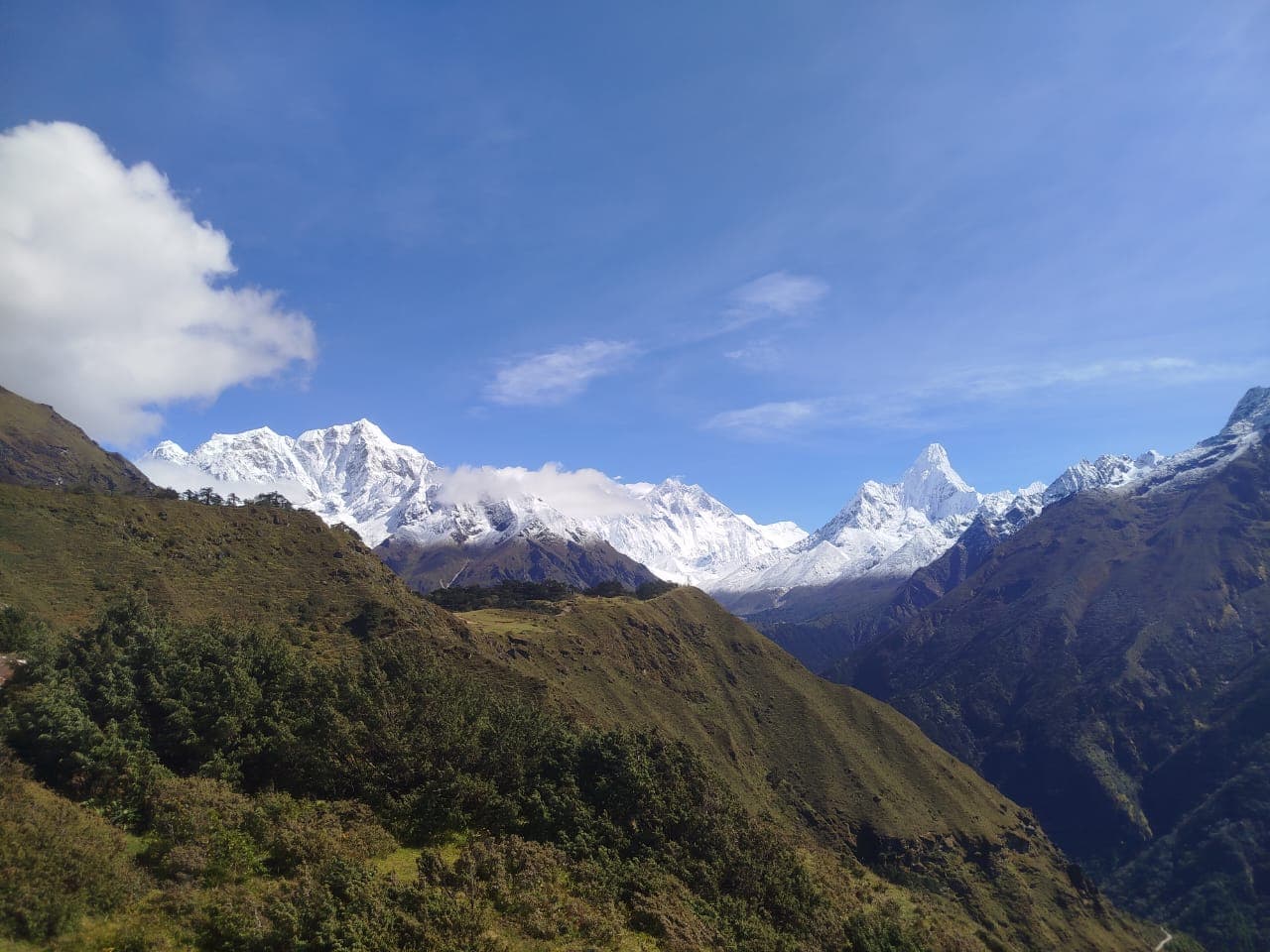
EBC is a village-to-village trek that still feels like a serious mountain route. The trail is well-trodden, but the scenery keeps getting bigger and colder as you move up the Dudh Koshi valley and then into the upper Khumbu.
There is also a strong sense of place. Tengboche monastery, the stone-walled fields around Dingboche, and the wide, wind-cut landscape near Lobuche and Gorak Shep all feel distinct. Even if you do not care about records or summits, the route has weight because it is tied to Everest climbing history.
Where Is It And How Do You Get There?
Everest Base Camp sits inside Sagarmatha National Park in Nepal’s Solukhumbu district.
Most trekkers travel from Kathmandu to Lukla by domestic flight, then start walking the same day. Flight schedules and weather delays are a normal part of the Lukla plan, so it helps to build a buffer day into your overall trip.
Permits and fees change over time. For protected-area entry fees, Nepal Tourism Board publishes a park entry fee table, which lists Sagarmatha National Park as NPR 3,000 for foreign nationals. (Other local fees may apply in the Khumbu.)
What The Trek Is Actually Like
The EBC trek is mostly about pacing. Many people can walk the hours, but the altitude makes the same distance feel harder as the days go on.
The first part is busy and social: Phakding, Namche Bazaar, and the villages in between. Past Namche, the trail opens and the nights get colder. Above Dingboche, you feel the landscape change into a more exposed, drier high-altitude valley.
Expect a lot of uneven stone steps, short steep climbs, and long gradual climbs. On many days you walk 5 to 7 hours, plus breaks. The hardest day for some trekkers is not base camp day, but the combination of cold, wind, and early morning hiking for Kala Patthar.
Route Overview
The standard route follows the Dudh Koshi valley to Namche Bazaar, then continues through Tengboche and the upper Khumbu toward Dingboche, Lobuche, and Gorak Shep.
Everest Base Camp itself is usually visited as a side walk from Gorak Shep. The classic viewpoint is Kala Patthar (5,545 m), usually climbed early in the morning for clearer skies.
Suggested Itinerary
This is a realistic 15-day structure (many variations exist).
Day 1: Arrive in Kathmandu
- Duration: easy day
- Altitude: ~1,400 m
- Highlights: prep and rest
- Notes: check flights and pack for a cold trek
Day 2: Fly to Lukla, trek to Phakding
- Duration: 3 to 4 hours walking
- Altitude: Lukla 2,840 m, Phakding 2,620 m
- Highlights: first suspension bridges, first river-valley walking
- Notes: keep the pace easy even if you feel strong
Day 3: Phakding to Namche Bazaar
- Duration: 6 to 7 hours
- Altitude: 3,440 m
- Highlights: the long climb into Namche
- Notes: this is a big effort day; hydrate and eat well
Day 4: Acclimatization day in Namche
- Duration: 2 to 4 hours of easy hiking
- Altitude: 3,440 m
- Highlights: short hikes for acclimatization, views when skies are clear
- Notes: sleep and food matter more than speed here
Day 5: Namche to Tengboche
- Duration: 5 to 6 hours
- Altitude: ~3,740 m
- Highlights: changing valley views, monastery area
- Notes: afternoons can get windy; start earlier
Day 6: Tengboche to Dingboche
- Duration: 5 to 6 hours
- Altitude: ~4,440 m
- Highlights: more open terrain, colder evenings
- Notes: take the day steady; avoid rushing this transition
Day 7: Acclimatization day in Dingboche
- Duration: 2 to 4 hours easy hike
- Altitude: ~4,440 m
- Highlights: rest, short uphill for acclimatization
- Notes: pay attention to headache and sleep quality
Day 8: Dingboche to Lobuche
- Duration: 5 to 6 hours
- Altitude: ~4,930 m
- Highlights: higher valley, memorial area near Thukla pass section
- Notes: cold and wind start to matter more now
Day 9: Lobuche to Gorak Shep, visit Everest Base Camp
- Duration: 6 to 8 hours total
- Altitude: Gorak Shep 5,170 m, EBC 5,364 m
- Highlights: reaching base camp area
- Notes: base camp is not a warm place to linger; prioritize safe return to Gorak Shep
Day 10: Kala Patthar, descend to Pheriche
- Duration: 7 to 9 hours total
- Altitude: Kala Patthar 5,545 m, Pheriche ~4,243 m
- Highlights: viewpoint climb, long descent with warmer air later
- Notes: start very early for the best chance of clearer skies
Day 11: Pheriche to Namche
- Duration: 6 to 7 hours
- Altitude: 3,440 m
- Highlights: easier breathing as you drop
- Notes: knees can feel the long descent; poles help
Day 12: Namche to Lukla
- Duration: 6 to 7 hours
- Altitude: 2,840 m
- Highlights: last full walking day
- Notes: keep some buffer for flight delays
Day 13: Fly to Kathmandu
- Duration: travel day
- Highlights: back to the city
- Notes: flights can be delayed by weather
Day 14: Kathmandu free day
- Duration: flexible
- Highlights: rest, shopping, or short sightseeing
- Notes: this day is useful as a buffer
Day 15: Departure
Best Time To Go
Spring
Spring is popular for warmer days and the feeling of the trails waking up after winter. Visibility is often good, but cloud can still build later in the day.
Autumn
Autumn is the busiest season for EBC. Post-monsoon air is often clearer, and temperatures are comfortable for walking in the lower section.
Winter
Winter has fewer people and crisp visibility, but colder nights and more risk of snow disrupting flights and the upper section. It suits trekkers who are comfortable with colder gear and extra flexibility.
Monsoon
Monsoon brings more cloud, rain, and flight disruption risk, especially around Lukla travel. The trail stays open, but conditions are less predictable.
Accommodation Along The Route
Accommodation is mainly teahouses. Expect simple rooms, shared bathrooms in many places, and dining rooms that are the warmest space in the building. The higher you go, the more basic it tends to feel, and the more expensive meals become.
Food And Local Flavours
Food is practical and repetitive, which is normal in high mountain regions. Common choices include dal bhat, noodle soups, fried rice, eggs, potatoes, and simple breakfasts. At higher stops, eating enough matters more than eating fancy.
Culture And Local Life
This is Sherpa country. The villages and monasteries are not side attractions; they are part of how the Khumbu has worked for generations. A respectful approach is simple: dress modestly in villages, ask before photographing people, and be patient in busy dining rooms.
Things To Know Before You Go
Altitude is the main challenge. A standard itinerary uses acclimatization days at Namche and Dingboche for a reason.
Weather and flights can change quickly. Lukla access is a real variable, so build flexibility into your schedule.
If you are unsure about your pace, choose the itinerary with more days, not fewer.
Practical Tips From Recent Trekkers
Many trekkers mention that the biggest difference comes from routine: start early, keep a steady pace, drink consistently, and do not skip meals even when appetite is low.
Carry small cash notes. Costs rise with altitude, and change can be limited.
Keep at least one buffer day before an international flight home.
Packing And Preparation Tips
Focus on warm layers for mornings and evenings, plus a shell for wind and light snow.
Trekking poles help on both the long climbs and the long descents.
Bring a headlamp for early mornings (Kala Patthar day) and a power bank for charging.
Safety And Responsible Trekking
Altitude awareness matters more than toughness. If symptoms worsen, descending is the safest response.
Travel insurance that covers trekking and evacuation is strongly recommended.
Be mindful of waste. Carry a reusable bottle, avoid single-use plastics, and take small litter out.
Final Thoughts
Everest Base Camp is a demanding trek, but it is also straightforward when you respect the pace and the altitude. If you want a route that feels social in the villages and serious in the high valley, EBC delivers that mix.
If you share your available days and your comfort level with altitude, it is easy to adjust this itinerary so it feels achievable rather than rushed.